Friday, February 28, 2014

Epic Fire Marked 'Beginning of the End' for Ancient Culture of Cahokia, New Digs Suggest

An artist’s rendering depicts Cahokia’s city center at its prime.
 Painting by L. K. Townsend;
 Image Courtesy of the Cahokia Mounds State Historic Site.
September 16, 2013.
Blake de Pastino, of Western Digs, has written an engaging article which reports on recent dig findings in Cahokia, which might show the turning point of Cahokian civilization.

"researchers with the Illinois State Archaeological Survey have discovered a widespread layer of charcoal and burned artifacts among the foundations of ancient structures — evidence of a great and sudden conflagration that consumed perhaps as many as 100 buildings.
While there’s only “circumstantial evidence” as to what caused the fire, the researchers say, what’s even more striking is that the event seems to mark an ominous turning point in Cahokian culture.
The structures destroyed by the fire were never rebuilt, the excavations showed. Meanwhile, other large, important buildings, like distinctive ceremonial “lodges” or houses for local elites, stopped appearing altogether throughout the region. And soon after the fire, a great palisade wall went up around the nearby city center — known to archaeologists as Downtown Cahokia — most likely for protection."

Video Courtesy of Illinois Historic Sites' Youtube Channel.

For more information about Cahokia, a UNESCO World Heritage Site, visit Cahokia Mounds State Historic Site's website here.

For more information about UNESCO World Heritage, visit our Frequently Asked Questions, the National Park Service's World Heritage page, or UNESCO's World Heritage page.

Thursday, February 27, 2014

Preserving Indigenous Democracy

February 17, 2014.

Duane Champagne, of Indian Country Today, has written an interesting article about the history of democracy within indigenous governments and how different nations acknowledge indigenous political processes.

"While indigenous and nation states share some common ground, history, and concerns with inclusive political participation, each indigenous nation retains unique cultural and political heritage, and ways of managing government. Indigenous governments and cultures are diverse. Most indigenous nations engage the contemporary world through a mix of traditional values and selected political and economic innovation. The diversity of indigenous cultures and political processes, however, is not compatible with the theory and practice of most contemporary liberal nation states, which prefer common acceptance and primacy of national political institutions..."
To read the full article, click here.

Wednesday, February 26, 2014

Professional Development Grants for Women

Critical Difference for Women
Applications Due
 September 26, 2013
(funded activity must occur between Jan. 1 & June 30, 2014) 
March 27, 2014 
(funded activity must occur between July 1 & Dec. 31, 2014)
No events will be retroactively funded.
"Professional Development Grants for Women are designed to facilitate professional development and career mobility of women. Regular faculty and staff who have been continuously employed at Ohio State for at least one year; full-time undergraduate students at the sophomore level and above; and full-time graduate/professional students are eligible to apply for a Professional Development Grant. Grants up to $1,000 will be awarded."
Potential Funding May be Used For
  • Participation and/or presentation at professional conferences, seminars, or workshops
  • Research
  • Materials, equipment, supplies, or other expenses directly related to career or professional development
  • Developing articles or books for publication
  • Networking or mentoring activities
Selection Criteria and Requirements

  • Preference is given to individuals with acute financial need.
  • Impact of participation on the candidate's individual development and her career or professional goals.
  • Financial need, including effort to secure funding from other available sources. Funding not readily available through other sources at Ohio State. Efficient use of resources for the activity/event.
  • Undergraduate students: 2.5 or higher cumulative GPA; graduate/professional students: 3.0 or higher cumulative GPA.
  • Preference is given to individuals who have not previously received a CDW Professional Development Grant or CDW Reentry Scholarship.
  • Funded events must occur between January 1 and June 30, 2014 (September 26, 2013, application deadline), or between July 1 and December 31, 2014 (March 27, 2014, application deadline). No after-the-fact events will be funded.
  • Students who receive financial aid: receiving this grant will result in a dollar-for-dollar reduction in your financial aid.
Application and Grant Guidelines can be found here.
For more information, contact:
Eunice Hornsby, Committee Chair
Professional Development Fund Committee
Gateway, Suite 300
1590 N. High St.
Columbus, OH 43210
Email: hornsby.1@osu.edu
Phone: (614) 688-8643

Tuesday, February 25, 2014

Fritz Scholder Interview


Image Courtesy of Fritz Scholder,  and the Academy of Achievement.
Image Courtesy of Fritz Scholder,
and the Academy of Achievement.
The Academy of Achievement has an informative and interesting interview with Native American artist Fritz Scholder, a leader in the New American Indian Art Movement. The National Museum of the American Indian has produced a film Fritz Scholder: Indian/Not Indian which received the Gold Medal of the American Association of Museums in 2009 which can be viewed online here.

"Today, in our society, everyone has to contend with the media, in which they like to immediately pigeonhole you and say, "This is an expressionist, this is this type of artist, or dancer, or whatever. It's a constant fight. All artists have to fight against what they become known for."
To view the full interview, click here.

Monday, February 24, 2014

2014 Archaeological Field School in Dublin, OH

2014 OSU Archaeological Field School in Dublin, OH Flyer

Sign up now to be a part of the Department of Anthropology’s 2014 Field School 
(Anthropology 5684, 3 credit hours, no pre-requisites), 
taking place Maymester May 5-30 in Dublin, Ohio at the Holder-Wright Site. 
The excavation area has extensive artifact scatter dating back over 10,000 years.
You’ll learn basic archaeological field and lab techniques, 
as well as learn about the importance of this site in Ohio’s fascinating prehistory. 

Full time Ohio State University students during Spring 2014 semester DO NOT pay tuition. 
There is a $500 lab fee.   

For more information and an application form, contact Dr. Julie Angel at angel.29@osu.edu .
For a PDF version of the flyer, click here.


Genome of America's Only Clovis Skeleton Reveals Origins of Native Americans and Stirs Ethics Debate

Recent studies of the remains of a Clovis culture associated 1 year-old boy, from a site within present-day Montana, reinforces the status of Native Americans as descendants of the First Americans. The Clovis culture is named for its distinctive spear heads and has been dated to around 11,000- 13,000 years ago.
For more information about the Clovis culture, visit a Smithsonian article by Charles C. Mann, "The Clovis Point and the Discovery of America's First Culture" here, or Texas Beyond History, The University of Texas at Austin's article "The Gault Site- Clovis Reconsidered" here.

Genome of American's Only Clovis Skeleton Reveals Origins of Native Americans
February, 12, 2014. 
"The remains of a one-year-old boy who died 12,600 years ago in what’s now Montana are giving up exceptional information about the place his people held in American history, and the origins of Native Americans on both continents of the New World.
First discovered in 1968 on the Anzick family ranch near Wilsall, Montana, amid the distinctive biface blades and other tools identified with the Clovis culture, the boy’s remains comprise the only known skeleton to be definitively associated with the Clovis, who lived as much as 13,000 years ago.
To read the full article, click here.


February 13, 2014.
"Rasmussen and colleagues' analysis of the Anzick-1 genome highlights some such questions. They find support for the proposal that Native Americans are descended from three 'streams' of gene flow from Asia, with some North Americans tracing their ancestry to multiple independent migrations from Siberia5. Intriguingly, their study reveals additional genetic substructure in North America — some Native North American populations are genetically differentiated from Central and South Americans and from Anzick-1, indicating ancient divergences between Native American populations."
To read the full article, click here.

February , 2014.
"After Willerslev’s team confirmed the link by sequencing the boy’s nuclear genome (a more detailed indicator of ancestry), Willerslev sought advice from an agency that handles reburial issues. He was told that, because the remains were found on private land, NAGPRA did not apply and no consultation was needed. Despite this, Willerslev made his own attempt to consult local tribes. This led to a meeting in September at the burial site, with Anzick, Willerslev and their co-author Shane Doyle, who works in Native American studies at Montana State University in Bozeman, and is a member of the Crow tribe.....Doyle and Willerslev then set off on a 1,500-kilometre road trip to meet representatives of four Montana tribes; Doyle later consulted another five. Many of the people they talked to had few problems with the research, Doyle says, but some would have preferred to have been consulted before the study started, and not years after."
-Ewen Callaway, Nature
To read the full article, click here.


February 13, 2014.
"The find offers the first genetic evidence for what Native Americans have claimed all along: that they are directly descended from the first Americans. It also confirms that those first Americans can be traced back at least 24,000 years..."The Clovis population seems to be more closely related to South Americans than to native North Americans," says David Reich of Harvard Medical School in Boston. "That's telling you that the Clovis sample seems to have occurred after the initial split of the lineages that gave rise to native South Americans and native North Americans." "
-Catherine Brahic, New Scientist
To read the full article, click here.

 
More articles and videos about the Anzick child can be found through


Friday, February 21, 2014

Communicating Science to the Public- and to Other Scientists


February 10, 2014.
Alex Jackson and SoapboxScience, published by Scientific American, has written a call to action article to demystify and clarify science and the humanities for the general public and other scientists.

"'Science, in my mind, has always been about two things, discovery and communication. As scientists we have to learn how to emphasise with a public audience for them to fully understand and to acknowledge the ideas we are seeing. The broader audience science can reach, the bigger the benefit in terms of the new ideas you are transmitting as a scientist.'- Du Sautoy"

Thursday, February 20, 2014

Action to Combating Trafficking in Cultural Property- a documentary on UNESCO's and its partners' activities

United Nations Educational, Scientific, and Cultural Organization (UNESCO)


UNESCO maintains a variety of publications, conventions, articles, and resources for combating illicit trafficking of cultural property. 


  • Historical Background
  • Statutes and Rules of Procedure
  • Conferences and Exhibitions
  • Database of National Cultural Heritage Laws
  • Illicit Trafficking of Cultural Property Publications (PDF)
    • Culture & Development- Stop the Illicit Traffic of Cultural Property. December 2013.
    • The Fight Against the Illicit Trafficking of Cultural Objects and the 1970 Conventions: Past and Future; Information Kit, Version II. December 2013.
    • Securing Heritage of Religious Interest, Cultural Heritage Protection Handbook, Volume 6. 2012.
    • Cultural Heritage Conventions and Other Instruments; A Compendium with Commentaries. 2011.
    • Witnesses to History- Documents and writings on the return of cultural objects. 2009.
    • Museum International- Return of Cultural Objects: The Athens Conference. 2009.
    • Commentary on the 1970 UNESCO Convention, 2nd ed. 2007.
    • ICPRCP Expert Meeting and Extraordinary Session in Celebration of its 30th Anniversary: Its Past and Future. 2008.
    • Legal and Practical Measures Against Illicit Trafficking in Cultural Property. 2006.
  • Protecting Our Heritage and Fostering Creativity
  • National Reports, 1978-2011.
    • Africa
    • Arab States
    • Europe & North America
    • Latin America & the Caribbean
  • Videos
    • "These productions are accessible free of charge and can be downloaded easily for information and training purposes. More explanations and documentation can be obtained upon request to the UNESCO Secretariat: Ms. Maria Miñana. "
  • Databases
    • International Organizations
      • UNESCO Database of National Cultural Heritage Laws
      • INTERPOL Database about stolen works of art
    • National
      • France: TREIMA Database of the Office Central de lutte contre le trafic des Biens Culturels (OCBC)
      • Germany: Lost Art Internet Database
      • Italy: Carabinieri National Stolen Cultural Property Database
      • Jordan: Antiquities sites database
      • Romania: Database
      • Spain: Database of the Guardia Civil
      • United States of America: National Stolen Art File
  • 1995 UNIDROIT Convention
    • Text
    • Actual Requirements of:
      • "If a cultural object has been stolen, it must be returned- restitution is an absolute duty unless the limitation period has expired. The only question arises is whether compensation must be paid."
  • 1970 Convention on the Means of Prohibiting and Preventing the Illicit Import, Export, and Transfer of Ownership of Cultural Property
    • Actual Requirements of:
      • "Preventive measures:Inventories, export certificates, monitoring trade, imposition of penal or administrative sanctions, educational campaigns, etc."
      • "Restitution provisions: Per Article 7 (b) (ii) of the Convention, States Parties undertake, at the request of the State Party "of origin", to take appropriate steps to recover and return any such cultural property imported after the entry into force of this Convention in both States concerned, provided, however, that the requesting State shall pay just compensation to an innocent purchaser or to a person who has valid title to that property. More indirectly and subject to domestic legislation, Article 13 of the Convention also provides provisions on restitution and cooperation."
      • "International cooperation framework:The idea of strengthening cooperation among and between States Parties is present throughout the Convention. In cases where cultural patrimony is in jeopardy from pillage, Article 9 provides a possibility for more specific undertakings such as a call for import and export controls."

Wednesday, February 19, 2014

11,000 Year Old Seafaring Indian Sites

Modern members of the Chumash, who have inhabited the Channel Islands,  re-create a crossing to the islands in a tomol canoe.  Image Courtesy of the National Park Service.
Modern members of the Chumash, who have inhabited the Channel Islands,
 re-create a crossing to the islands in a tomol canoe.
Image Courtesy of the National Park Service.
January 6, 2014.
Blake de Pastino, of Western Digs, has written an exciting article about recent site finds which suggest Paleoindian occupation along North America's West Coast, 11-12,000 years ago.

"The discovery adds hefty new data to the already mounting evidence that maritime Paleoindians — also known as Paleocoastal peoples — lived along the California coast at the end of the last ice age.
Such finds have important implications for the history of human migration, suggesting that at least some of America’s earliest settlers moved south from Alaska along the coast, rather than farther inland, where retreating glaciers are thought to have allowed passage to the continent’s interior."

Cladoosby Hopes to Initiate Repatriation Discussion with France

Swinomish Chairman Brian Cladoosby introduces President Obama as the "first American Indian president" of the U.S., at the 2012 White House Tribal Nations Conference. Cladoosby and his wife will be the Obamas' guests at the White House State Dinner for French President Francois Hollande, February 11.  Image Courtesy of Brian Cladoosby.
Swinomish Chairman Brian Cladoosby introduces President Obama as the "first American Indian president" of the U.S., at the 2012 White House Tribal Nations Conference. Cladoosby and his wife will be the Obamas' guests at the White House State Dinner for French President Francois Hollande, February 11, 2014.
Image Courtesy of Brian Cladoosby.
February, 7, 2014.
Richard Walker, of Indian Country Today, has written a hopeful article about the visit between National Congress of American Indians President Brian Cladoosby, President Obama, and French President Francois Hollande on February 11th and potential agreements for repatriation of Native American artifacts in French museums.

"Marinello said there are no international agreements specifically addressing Native American artifacts, and said “it is something that the Americans should be convening and discussing because the laws in the USA protecting those Native artifacts have no weight overseas.”
That’s what Cladoosby hopes to initiate, noting, “We want to ensure our most sacred items are treated the same way” as those covered by other repatriation conventions."


For more information about the importance of repatriation for Native American artifacts, visit National NAGPRA's website or Youtube channel. The Newark Earthworks Center's Blog created a post about this topic 2/12/2014.

For more information about the 1970 UNESCO Convention on the Means of Prohibiting and Preventing the Illicit Import, Export, and Transfer of Ownership of Cultural Property, click here.


Tuesday, February 18, 2014

The Newberry Library

The Newberry Library, Chicago's Independent Research Library Since 1887.

The Newberry Library. Image courtesy of the Newberry Library.
Front entrance, as seen from North Dearborn Street.
 Image courtesy of the Newberry Library.
"The Newberry acquires and preserves a broad array of books, manuscripts, maps, and other materials relating to the civilizations of Europe and the Americas. We focus our collecting on original or primary source materials – such as manuscripts and early editions of printed books and maps – that will be preserved and made available for generations. In doing so, we aspire to enhance the great collection strengths that have been built by curators, librarians, other scholars, and donors throughout the library’s history.
We also selectively acquire secondary literature – scholarly editions of primary sources, reference tools, monographs, journals, and digital resources – in order to facilitate access to and use of our original source materials."

Core Collections

The Newberry Core Collections
  • American History & Culture
    • American Literature
    • Discovery & exploration of the Americas
    • History of the Colonial Period, Revolutionary Era, & Early Republic
    • Westward Expansion
    • Civil War & Reconstruction
    • Genealogy
    • Religion
  • American Indian & Indigenous Studies
    • Native American Archaeology, Ethnology, Art, & Language
    • History of the Contact between Europeans & Native Peoples
    • Voyages, Travels, & Accounts of Early America
    • Development of Cartography of the Western Hemisphere
    • Philippine & Hawaiian History
  • Maps, Travel, & Exploration
    • Manuscript Accounts
    • Printed (published) Accounts
    • Guidebooks
    • Travel Ephemera
    • Related Collections of Original Source Literature of Geographical Interest
    • Local histories
    • Art, views, illustrations, & photographs
    • Secondary Literature
The Newberry Digital Resources
  • Ayer Art Digital Collection
    • "This collection of over 500 images hints at the rich visual material on American Indian history and culture found within the Library's world-renowned Ayer Collection. In 1911, Edward E. Ayer (1841-1927) donated more than 17,000 pieces on the early contacts between American Indians and Europeans. Ayer, a member of the Library's first Board of Trustees, was the first donor of a great collection to the Newberry. Since then, the Ayer endowment has enabled the Library to collect in excess of 130,000 volumes, over 1 million manuscript pages, 2000 maps, 500 atlases, 11,000 photographs and 3500 drawings and paintings relating to the discovery, exploration and settlement of the Americas." 
  • "Border Troubles in the War of 1812" Virtual Exhibit
    • "This exhibition refocuses our attention on the conflict in the area then known as the West: firsthand accounts of warfare; territorial struggles between Indian nations and the United States; an East Coast print culture that romanticized wartime life in the Great Lakes region; and representations of the war in textbooks and other histories of the United States."
  • Great Lakes Digital Collection
    • "This collection features nearly 550 images of Illinois and the Great Lakes region from the French period of exploration and settlement to the early 20th century. Most of the images in the Great Lakes Collection are maps: printed maps of late colonial and early America; manuscript maps on early Illinois history; maps that document the growth and settlement of Illinois; maps showing the development of the State's transportation system; sections from 19th century county atlases; maps of the Chicago region; and, a selection of USGS topographic sheets. The Great Lakes Collection also includes a representative sampling of the Newberry's visual sources for the study of [North] American Indians. "
  • "Indians of the Midwest: An Archive of Endurance" Virtual Exhibit
    • "this exhibition focuses on the largely Algonquian and Siouan cultural region of the Great Lakes.  Native peoples of this region have long been at the cultural crossroads created by intertribal relations, the rise of the fur trade, colonialism, and finally Euro-American settlement.  From the ascendancy of Cahokia, the largest indigenous urban center north of Mexico, in what is now central Illinois, to the struggles for American Indian civil rights in the mid-twentieth century, the Midwest remains an Indian space."
  • Lewis and Clark and the Indian Country: 200 Years of American History Virtual Exhibit
    • "this website explores how these two histories, that of the United States and that of Indian peoples along the expedition route, came together two hundred years ago and how they remain intertwined today. "
  • Mapping the French Empire in North America Virtual Exhibit
    • "The exhibit presents maps, images, and text from three distinct geographical regions: The Maritimes and the Saint Lawrence River Valley; The Great Lakes and the Upper Mississippi Valley; and the Caribbean and the Lower Mississippi Valley."
  • North American Photographs
    • "This selection of photographs of Midwestern Indian tribes—Menominee, Ojibwa, Winnebago, Santee, Yankton, and Yantonai—is derived from a much larger collection of over 6,000 images of North American Indians in the Newberry Library's world-renowned Edward E. Ayer Collection. In collecting contemporary 19th and early 20th century photographs, Ayer sought to document Indian experience during his own lifetime. The images he assembled, mainly posed studio portraits together with some outdoor and candid scenes, provide an invaluable visual record of away of life that was rapidly changing. They also document the rapid spread of photographic technology and provide evidence of local photographers and photographic studios throughout the Midwest. "

The Newberry Research Centers

Monday, February 17, 2014

Administration Agrees to Fully Pay Tribal Contract Support Costs

February 17, 2014.
Rob Capriccioso, of Indian Country Today, has written an informative article about the reported agreement of the Obama administration "to abide by Supreme Court decisions requiring reimbursement of full tribal contract support costs."

"The tide for tribes improved on this matter in January when Democratic and Republican Congress members announced a budget agreement that said the federal government must treat tribal contractors the same way as any other government contractor by getting reimbursed for work that they perform. Until 1999, payments to tribal contractors were reimbursed by the federal government, but at that time the IHS began citing budget shortfalls as a reason to not reimburse these costs. Since then, hundreds of millions of claims have gone unpaid to tribes."
To read the full article, click here.

For more information about Tribal Contract Support Costs based on the Indian Self-Determination Act, visit the National Congress of American Indians here.

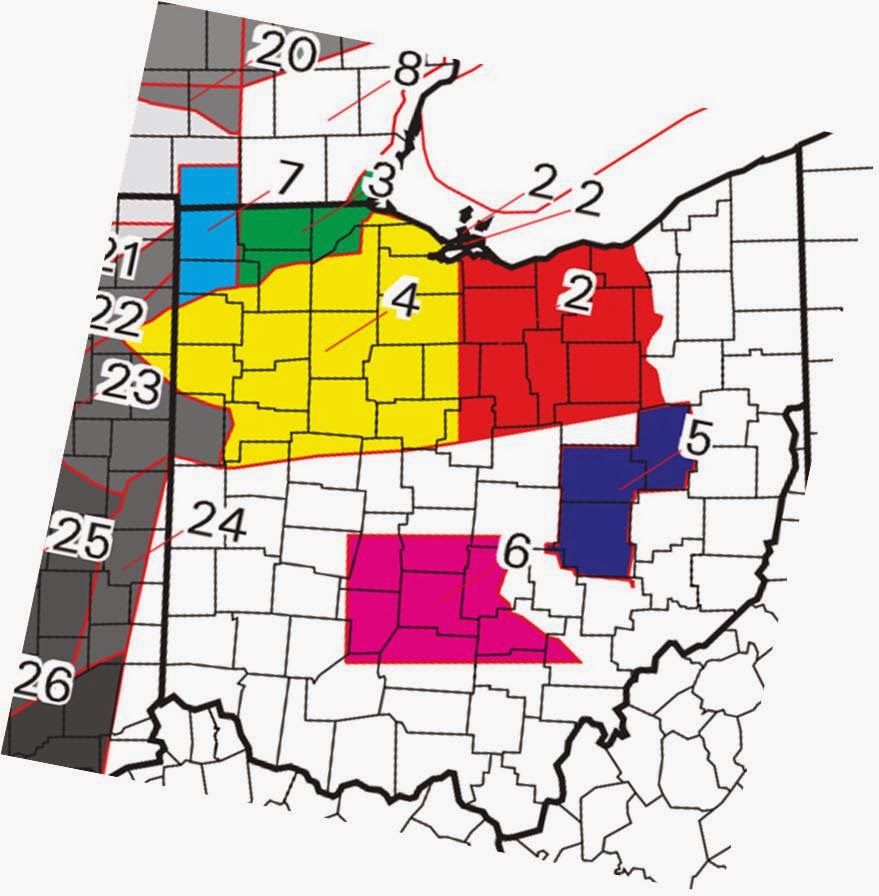
Indian Land Areas Judicially Established 1978 Map

"The “Indian Land Areas Judicially Established 1978” map was prepared by the United States Geological Survey at a scale of 1:4,000,000, Albers projection from information provided by the Indian Claims Commission. The map portrays the results of cases before the commission in which an Indian tribe proved its original tribal occupancy of a tract within the continental United States. Each tract is outlined with a solid black line. The number on each tract refers to the Indian Land Area Map Index in the commission’s final report. A dashed line around an area indicates that the case was settled before an exact area was defined. Adjacent tracts with the same color indicate a tribal relationship. Otherwise, the coloring is arbitrary.
The map was reissued by the United States Geological Survey in 1993. This map was digitized by the Center for Advanced Spatial Technologies to a scale of 1:5845860 using a Lambert Azimuthal Equal Area Projection. State, and county data were then added. Although better resolution can be gained by viewing a the PDF version, users are urged to use the Native American Consultation Database to search for specific information." -National NAGPRA

Ohio*
Ohio Closeup from "Indian Land Areas Judicially Established 1978" Map.
Ohio Close-up from the map
"Indian Land Areas Judicially Established 1978".
2. Delaware, Wyandot, Potawatomi, Ottawa, Chippewa
3. Ottawa
4. Delaware, Ottawa, Shawnee, Wyandot
5. Delaware
6. Shawnee
7. Potawatomi, Ottawa, Chippewa
23. Miami

*Numbers are according to the Map Index here.

Friday, February 14, 2014

Books Funded by National Endowment for the Humanities Grants


Every year the National Endowment for the Humanities creates a list of books which were at least partially funded by their research grants. Of the many books published in the past few years, several pertain to Native American research, among which include:

Death by Effigy. Luis R. Corteguera.
Buffalo Bill from Prairie to Palace. John M. Burke, edited by Chris Dixon.

Resisting Categories. Mari Ramirez, Hector Olea, Melina Kervandjian.
This Indian Country. Frederick E. Hoxie.


Beyond the Lettered City. Joanne Rappaport.
Bound Lives. Rachel O'Toole. 

Ezhichigeyang. Anton Treuer.
 

Thursday, February 13, 2014

Updated Federally Recognized Tribes List Published

February, 10, 2014.

Gale Courey Toensing, of Indian Country Today, has written a short informative article about the importance and purpose of the Federally Recognized Indian Tribes List.

"The list includes the 566 American Indian and Alaska Native tribal entities – nations, tribes, bands, communities, Pueblos, and villages – that are acknowledged to have:
-- The immunities and privileges available to federally recognized tribes by virtue of their government-to-government relationship with the United States,
-- The responsibilities, powers, limitations and obligations of such tribes, and
-- Are recognized and eligible for funding and services from the BIA by virtue of their status as Indian tribes."

For the full article, click here.
To view the updated Federally Recognized Indian Tribes List, click here.

For more information about the policy for recognizing Indian Tribes by the U.S. Government, visit the Library of Congress' page here.

Wednesday, February 12, 2014

Consultation Under NAGPRA, the Native American Graves Protection and Repatriation Act.

Video Content is courtesy of National NAGPRA's Youtube Channel.

"The Native American Graves Protection and Repatriation Act is a Federal law passed in 1990. NAGPRA provides a process for museums and Federal agencies to return certain Native American cultural items -- human remains, funerary objects, sacred objects, or objects of cultural patrimony -- to lineal descendants, and culturally affiliated Indian tribes and Native Hawaiian organizations. NAGPRA includes provisions for unclaimed and culturally unidentifiable Native American cultural items, intentional and inadvertent discovery of Native American cultural items on Federal and tribal lands, and penalties for noncompliance and illegal trafficking. In addition, NAGPRA authorizes Federal grants to Indian tribes, Native Hawaiian organizations, and museums to assist with the documentation and repatriation of Native American cultural items, and establishes the Native American Graves Protection and Repatriation Review Committee to monitor the NAGPRA process and facilitate the resolution of disputes that may arise concerning repatriation under NAGPRA."

For more details about the Native American Graves Protection and Repatriation Act, 

Resources

Tuesday, February 11, 2014

Indian Mounds of Mississippi

Representation of some of the hundreds
of earthen monuments built by American Indians.
Courtesy of the Southeast Archaeological Center.
"On behalf of the Historic Preservation Division, Mississippi Department of Archives and History, and the Southeast Archeological Center, NPS, we invite you to explore 11 publicly accessible American Indian mound sites in Mississippi and experience these impressive ancient structures.

At some point over two thousand years ago the first artificial mound was built in Mississippi. Eventually there were thousands constructed for various purposes by the State's precontact inhabitants. Today, only a small percentage of these remain. The 11 included in this travel itinerary date from approximately 100 B.C. to 1700 A.D. and are representative samples of sites that were originally so numerous.

This virtual tour allows you to learn about how the Middle Woodland (100 B.C. to 200 A.D.) and Mississippian Period (1000 to 1700 A.D.) mounds were built and examine the artifacts and other clues archeologists use to understand the cultures that made them. These mound sites offer much more than a tour through thousands of years of Mississippi history. They stand as testaments to the American Indian presence on the landscape and as monuments to the first inhabitants of the southeastern United States. We hope that after you have traveled to these mound sites online, you will visit them in person and see these awe-inspiring memorials that were once the center of life for some of the most highly organized civilizations in the world."


Friday, February 7, 2014

Burial Mounds found in Coshocton County

January 19, 2014.
Carole Cross, of the Coshocton Tribune, has written an interesting article about the historical excavations of various burial mounds found in Coshocton County.

Thursday, February 6, 2014

DISCO Scholarship Available for an AIS Minor!

Dear Students,

The Diversity and Identity Studies Collective at OSU (DISCO)Interdisciplinary Programs Scholarship is designed to support students who are enrolled in any of the undergraduate DISCO interdisciplinary programs: American Indian Studies minor, Asian American Studies minor, Disability Studies minor, and/or Sexuality Studies minor or major.  Students must have officially declared their enrollment in one of these five programs in order to apply for the scholarship and should work with the relevant program advisors (Prof. Murphy for AIS in Newark) to ensure they are officially enrolled. Please also note that previous recipients are permitted to reapply for these scholarships, but that, all else equal, first-time applicants will receive priority consideration.

Scholarship applications for the 2013-2014 academic year will be due Monday, February 17, 2014.

Applications are comprised of a completed online application form as well as a 500-word essay describing how the particular DISCO program in which they are enrolled has helped them, and/or how they expect it to help them and/or is expected to help them personally, educationally, and/or professionally. 
Decisions will be made by April 2014.

For information about how to apply, please see:  http://disco.osu.edu/Students/InterdisciplinaryProgramsScholarship.

Best,
Nick Spitulski

For more information about American Indian Studies, or its Minor, visit their website here.