Showing posts with label Undergraduate Research. Show all posts

Monday, March 13, 2023

Ohio History Connection Job Opportunity | Newark Earthworks Interpretive Intern (Seasonal)

 The Ohio History Connection's mission is to

Spark Discovery of Ohio's stories.

Embrace the present, share the past, and transform the future.


Schedule: Wednesday-Saturday, occasional Sundays

Pay Rate: $15.00/hr

Summary:

Interns at Newark Earthworks engage in a variety of work-based learning activities and projects at a precontact American Indian site nominated for World Heritage status. Interns will assist with the creation and facilitation of formal and informal interpretive programs that enhance visitor experience and knowledge of Hopewell Culture.

Essential Functions:

• Presenting formal interpretive programs - talks, walks, and guided tours
• Performing informal interpretation - roving and meeting visitors within the site not as a part of a program
• Greeting visitors at the front desk of the museum
• Providing information and orientation to the site
• Answering questions about the Newark Earthworks and related earthwork sites
• Setting up the site(s) for special programming and events.
• Providing staff support for special events and programming such as open houses.
• Performing bookstore transactions - handling money, operating cash register, and recording sales using Point of Sales system
• Working weekend and occasional evening shifts.
• Other duties as assigned.

Required Education & Experience

• Must be over 16 and a) have graduated from high school or been awarded a certificate equivalent to graduating from high school or b) completed a formal vocational training, or c) be currently enrolled in a secondary school and either work during school vacation periods or work part-time during the school year under a formal student employment program
• An educational course in one of the following areas: American history, archaeology, art history, museum studies, education, geography, geology, natural resources, interpretation, or other relevant topics related to archeological and historical sites and museums.

Desired Skills & Experience

• 6+ months of combined experience working with the general public (ex. retail, reception, front desk work, food service, etc.)
• Experience interacting with school-aged children.

Required Competencies:

• Self-motivation - not having to wait on instruction to do necessary tasks or projects.
• Ability to work as part of a team - you will be coordinating your day with other members of the visitor services team and may be working on projects and programs with one or more coworkers. As a member of the Ohio History Connection, you will be a part of a large group of people coming together to achieve organizational goals.
• Communication - ability to communicate with coworkers, managers, and customers in a respectful and timely manner, this includes listening and responding and keeping others informed.
• Coachability - being receptive to feedback, willing to learn, and embracing improvement

Work Environment:

• Much of the site is located outdoors with little to no shade
• Excessive heat possible
• Excessive humidity possible
• Grounds can be uneven.
• The museum is a small, enclosed space that at times be dimly lit.

Physical Demands:

• Front desk duties may require one to remain stationary for long periods of time.
• Tour duty may require one to walk the equivalent of half a mile, modifications to tours can be made to accommodate mobility restraints.

EOE Statement:
Ohio History Connection will recruit, hire and maintain a diverse workforce allowing for the inclusion of every employee's unique value, contribution and potential. OHC is committed not only to the principle of equal employment opportunity but also to the letter and spirit of the law. OHC, as an equal opportunity employer, does not discriminate in its employment on the basis of race, color, religion, sex, gender, sexual orientation, gender identity or expression, pregnancy and/or related conditions, national origin, ethnicity, age, veteran status, genetic information, medical condition, physical or mental disability, or on any other basis protected by federal, state or local law. OHC ensures that equal employment opportunity applies to all areas of employment including hiring, promotion, demotion, transfer, recruitment, selection, discipline, termination, compensation, benefits and training.

ADA Compliance:
Ohio History Connection is committed to the full inclusion of all qualified individuals. As part of this commitment, OHC will ensure that persons with disabilities are provided reasonable accommodations. If reasonable accommodation is needed to participate in the job application or interview process, to perform essential job functions, and/or to receive other benefits and privileges of employment, please contact the Human Resources Department at 614-297-2390 or by email at applicant@ohiohistory.org.

Ohio History Connection is an equal opportunity employer.

All prospective employees are required to undergo a fingerprint background check processed by the Ohio Bureau of Criminal Investigation & Identification (BCI) in accordance with the Volunteer Children's Act. Additionally, prospective employees will also submit to a drug test. Both will occur after the offer of employment is accepted. The results of the background check and drug test are not immediate disqualifiers to employment and are reviewed in accordance with Ohio History Connection policies and procedures. Inquiries must be directed to the Human Resources Director at 614-297-2390 or via email at applicant@ohiohistory.org.


Apply at Ohio History Connection here.

Thursday, February 27, 2020

Cancelled | Behind the Science: The Dakota and Ojibwe Skies

March 11, 2020: Regretfully, the Newark Earthworks Center is cancelling  all sponsored events through April 20th, 2020 at this time.
......................................................................................................................................................................................................................................................................................

February 24, 2020 
Just in time to observe the spring equinox, The Ohio State University at Newark and The Works: Ohio Center for History, Art & Technology invite the public to learn how our American Indian ancestors used the moon, earthen architecture, and a turtle’s shell to predict astronomical events with remarkable precision.

Jim Rock [Dakota] with Ojibwe Skies Map behind him. Image Courtesy of Jim Rock.In this Behind the Science lecture, James Rock presents
 “The Dakota and Ojibwe Skies” 
on Thursday, March 19,
 from 6 to 7 p.m. in the SciDome planetarium.

Rock, a citizen of the Dakota Nation, is a faculty member in the Department of Physics and Astronomy and Director of Indigenous Programming for the Marshall W. AlworthPlanetarium at the University of Minnesota Duluth. In 2014 he co-authored the book D(L)akota Star Map Constellation Guide and has co-published several journal articles on Dakota sacred mound and cave sites. He will discuss both topics from his published works in addition to local connections with the Newark Earthworks and the Serpent Mound in Peebles.

This lecture is sponsored by the following units at The Ohio State University: Newark Earthworks Center (NEC), American Indian Studies program, Arne Slettebak Planetarium, and Global Arts and Humanities/Indigenous Arts andHumanities Initiative.

Behind the Science is a public lecture series presented by Ohio State Newark and The Works for adults who want an inside view of the science that makes our world.

All lectures are held in the SciDome at The Works located at 55 S. 1st Street in Newark.
Admission is free for The Works’ members and $10 for nonmembers. Reservations are recommended and can be made online at attheworks.org or by calling The Works at 740-349-9277.
For additional details, visit go.osu.edu/SciDome or see The Works’ online calendar of events.

Friday, February 7, 2020

Falling for Autumn 2020 Classes?

Octagon State Memorial in October in a heart shaped image. Image Courtesy of Tim Black.
Check out our OSU Classes Tab!

We have updated our lists of current and future classes
 by semester and campus.

See below for a sampling of what is currently available 
for Autumn 2020:


American Indian History of the U.S. Midwest
History 2071
Dr. John Low
M W 5:30-6:55 PM
3 credit hours.
Native American history in Great Lakes and Ohio Valley regions from ancient times to the present, including moundbuilders, fur trade, removal, reservations, urbanization, contemporary issues. Sometimes this course is offered in a distance-only format. 
Prerequisite or concurrent: English 1110.xx, or permission of instructor. 
GE historical study and diversity soc div in the US course.
Limit of 35 students.

Introduction to Native American Peoples from Mesoamerica
History 2110
Dr. Alcira Dueñas
M W 12:45-2:05 PM
3 credit hours.
Introductory survey of the Native American peoples from Mesoamerica (contemporary Guatemala, Honduras, Southern Mexico) from pre-colonial times to the present. Sometimes this course is offered in a distance-only format. 
Prerequisite or concurrent: English 1110.xx, or permission of instructor. 
GE historical study and diversity global studies course.
Limit of 40 students.

The History of Latin America Through Film
History 2125
Dr. Alcira Dueñas
M W 2:20-3:40 PM
3 credit hours.
Latin American history from the pre-colonial era to the present as depicted in film, including the analysis of colonialism, revolutions, society, women, and current events. Sometimes this course is offered in a distance-only format. 
Prerequisite or concurrent: English 1110.xx, or permission of instructor. 
GE historical study and diversity global studies course.
Limit of 35 students.

Natives and Newcomers: Immigration and Migration in U.S. History
History 2750 
Dr. Lucy Murphy
T R 9:35-10:55 PM
3 credit hours.
General survey of (im)migration history in the U.S. from precolonial times to the present. Topics include cultural contact, economic relations, citizenship, politics, family, and sexuality.
Prerequisites or Concurrent: English 1100.xx.
Not open to students with credit for 322.
GEC: Historical Study and Social Diversity in the United States credit. 
Limit of 40 students.

History of Mexico
History 3106
Dr. Alcira Dueñas
M W 9:35-10:55 AM
3 credit hours.
History of Mexico during precolonial, colonial, and independence periods with emphasis on the 19th and 20th centuries.
Prerequisites: English 1110.xx, or permission of instructor.
Not open to students with credit for 534.03.
GEC historical study and diversity global studies course. 
Limit of 35 students.

Literature and Religion
Religious Studies 2102.01
Cheryl Cash
T R 5:30-6:50 PM
3 credit hours.
Study of relationships between religion and secular literature; analysis of religious and spiritual elements of literature and film of diverse cultures and historical periods. 
Prerequisites: English 1110 (110) or equiv. Not open to students with credit for 2102.01H, Comparative Studies 2102.01 (202.01), or 2102.01H (202.01H). 
GE lit and diversity global studies course.
Limit of 35 students.

Tuesday, September 17, 2019

The Warrior Women Project Public Film Screening & Discussion with Madona Thunder Hawk, Marcy Gilbert & Dr. Elizabeth Castle

The Warrior Women Project Flyer (PDF available).
PDF available.
1 - 2:30 PM

In the 1970s, with the swagger of unapologetic Indianness, organizers of the American Indian Movement (AIM) fought for Native liberation and survival as a community of extended families. Warrior Women is the story of Madonna Thunder Hawk, one such AIM leader who shaped a kindred
group of activists' children - including her daughter Marcy - into the "We Will Remember" Survival School as a Native alternative to government-run education. Together, Madonna and Marcy fought for Native rights in an environment that made them more comrades than mother-daughter. Today, with Marcy now a mother herself, both are still at the forefront of Native issues, fighting against the
environmental devastation of the Dakota Access Pipeline and for Indigenous cultural values. Through a circular Indigenous style of storytelling, this film explores what it means to navigate a movement and motherhood and how activist legacies are passed down and transformed from generation to generation in the context of colonizing government that meets Native resistance with violence.

Room 110-Auditorium

Sponsored by Ohio State Newark Cultural Arts and Events Committee, Office of Student Life, Native, American Indian & Indigenous Studies Organization (AIISO) student club, GAHDT/IAH grant, the Program in American Indian Studies and Newark Earthworks Center.

For more information, contact John Low, Ph.D, Native American & Indigenous Studies and Vorley Taylor, Multicultural Affairs.


Wednesday, July 3, 2019

Not food scraps after all: turtle shells as Native American musical instruments

September 8, 2018.
Amy Smith wrote a brief article on New Historian.com. She summarizes about how recent research has discovered that turtle shells were used for more than just food.

In the past, turtle shells found at archaeological sites have often been dismissed as food remains. However, in an article published in academic journal PLOS One, Professor of Anthropology, Tanya Peres, says these turtle shells were used as rattles and other musical instruments. Gillreath-Brown, a doctoral candidate from Washington State University, says "Turtle shell rattles provide deep insights into human-environment and animal relationships." He also says, "this symbology and belief is imbued into the turtle shell rattles, which are meant to keep rhythm and thereby interjects powerful symbology and spiritual energy into dances and ceremonies." 

The research draws upon turtle shell rattles that have been discovered throughout North America; from Florida to the north east, and all the way up to Canada. Each region is likely to attribute different meaning and levels of importance to these rattles; but their presence in such a widespread group of localities demonstrates that turtle shells were important to creating rhythm in ceremonies across prehistoric North America. 

For more Information,
Visit:

Tuesday, June 11, 2019

VITA | Scholarly Activity Management

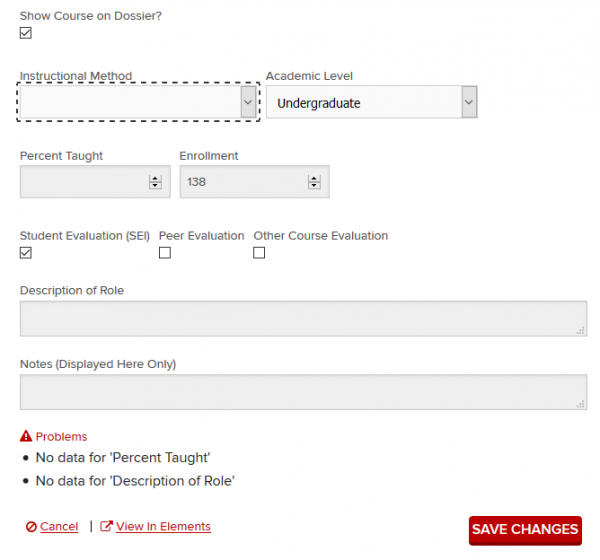
VITA Scholarly activity management. Image Courtesy of the Office of Learning and Organizational Development.

"Generate an approved promotion and tenure dossier that aligns to the requirements of the Office of Academic Affairs (OAA). Log in to enter new information, create, download and print your dossier, report on professional activity and more."

"If you wrote it, presented it, or reviewed it, you should be tracking it here....

Ohio State faculty, staff and students can use this service to view, report, and search their accomplishments in teaching, research, and service...

Tip
You have to log into vita.osu.edu and edit your publications. For some reason, publications that VITA finds often have more than one source. In that case, the system doesn’t know which source to use to send to the MSE page and so it sends nothing. So you have to click on the sources tab for each publication and pick one source by clicking on a star. It doesn't matter which one you select." 

Vita Course Form Screenshot. Image Courtesy of the Office of Distance Education and eLearning.

"The creation of a dossier is required of all candidates seeking promotion and/or tenure. It is also required of tenure-track faculty undergoing fourth year review. The Ohio State University has standardized the dossier creation process with Vita, a program aligned with Elements that permits users to create and store a dossier online.....

Guides for Dossier Creation
There are resources to help you put your dossier together for promotion review. It is strongly recommended that you utilize these guides to help guide you enter data effectively and efficiently.
  • University's Instructions for Candidates​: The University P&T guidelines for the creation of the core dossier are excerpted and also referenced in the below RIV guides, which are still applicable.
  • RIV insider guide : This step-by-step guide walks you through the dossier creation process, developed by Dr. Judy Westman and Jane Pierce, Internal Medicine.
  • RIV Tip Sheet: This document is a FAQ for common pitfalls, created by Jane Pierce in Internal Medicine.
TIP: Don’t undersell
In preparation of the promotion dossier it is important that faculty members (and departmental review bodies) appropriately recognize credit for the accomplishments of the faculty. Some activities meet criteria for several aspects of faculty evaluation, and the dossier should reflect those activities in multiple sections. Since the dossiers are reviewed by faculty peers and administrators outside of the department, it is highly likely that those individuals will not appreciate the importance of accomplishments that may seem self-evident to people inside the discipline. It is therefore important that the faculty member and the department put those accomplishments in the appropriate perspective. For example, in some highly specialized areas of research the impact factor of the very best journals may be relatively low. It would be important in that case to include the necessary context for publications in those journals to be properly evaluated.

TIP: Use the narratives to tell your story
The narratives are the only place in the dossier that a candidate can tell his or her story. The data points are important, but they are subject to a wide variability of interpretation if context is not provided. Remember that faculty members from other departments will evaluate the dossier. They will not know what the important achievements are in other disciplines. The candidate must use the narratives to contextualize his or her achievements. A candidate should assume that reviewers have very little prior knowledge, and should therefore write in layman's terms as much as possible....."

For more information,
Visit:

Monday, June 3, 2019

Newly Named Ferris-Wright Park Open!


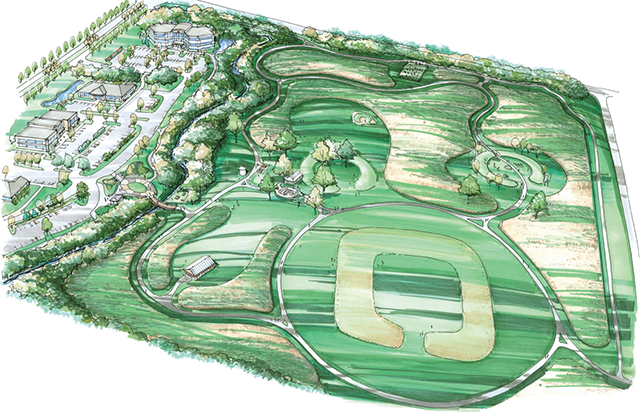
Dublin's Ferris-Wright Park, formerly referred to as Holder-Wright Park. Image Courtesy of City of Dublin.

June 26, 2018.
"Located at the northeast corner of Emerald Parkway and Riverside Drive, the new Ferris-Wright Park and Hopewell Earthworks will preserve and showcase the ancient earthworks, farmhouse and natural features of the space that are a significant part of Dublin’s history.

The land surrounding the park has been home to many over the years, from the indigenous peoples of the Hopewell era to one of Dublin’s first settlers, John Ferris.

Archaeological records show many groups of tribes represented at this site, with the oldest dating back to Clovis times, or about 12,000 years ago. More recently, tribes during the Hopewell era built earthworks and mounds on the site around 200 B.C. to A.D. 400.

Earthworks are precise geometric shapes that held meaning and purpose, serving as ceremonial spaces for marriages and other celebrations, honoring the dead, making alliances, feasting and sacred games."

Guided tours are available this summer, 
(Please register).


"Join us on a guided tour of the new Ferris-Wright Park. Discover the rich history of the land which was once home to indigenous peoples thousands of years ago, and later some of Dublin’s first settlers and 20th century residents.

Ferris-Wright Park contains three earthworks and five burial mounds, precise geometric shapes that hold meaning and purpose, built by indigenous peoples of the Hopewell era.

Another feature of the park is the restored Ferris farmhouse, said to be the first frame house in Dublin. An interpretive center located in the farmhouse honors the past through interactive stations that tell the stories of inhabitants through the years.

Participants will learn the history of the property from the Hopewell cultures, to the Wyandot, and the Ferris/Wright/Holder farm families. The tour includes artifacts and replicas of objects from archaeological digs by Ohio State in the 1920s, 60s and 80s."

For more information,
Visit:

Thursday, May 30, 2019

Coastal Strip in Brazil Sheds New Light on Early Farming

September 5, 2018
In a brief article by Heritage Daily, it is announced that an international team of scientists from the University of York used teeth and bones of ancient humans remains to analyze ancient diets. The research shows that humans may have been cultivating plants on a narrow coastal strip in Brazil as far back as 4,800 years ago! The results also reveal that the individuals were eating a diet full of carbohydrates; suggesting that the may have cultivated plants like yams and sweet potatoes. Senior author of the study, Dr. André Colonese from the Department of Archaeology at the University of York, said: "Our findings may place the Atlantic Forest 'on the map' of early plant cultivation in the Americas." " 

To read the full article, click here.


For more information,
Visit:

Wednesday, May 8, 2019

Scheduling Autumn Semester Classes?

Try checking out our OSU Classes Tab!

We have updated our lists of current and future classes
 by semester and campus.
See below for a sampling of what is currently available 
for Autumn 2019:
Literature and Ethnicity
Comparative Studies 2105
Dr. John Low
T/H 3:55-5:15 PM.
Course Number 28360
3 credit hours.
This course explores the study of the relationships between literature and ethnicity; analysis of concepts of ethnicity as represented in literature and film of diverse cultures and historical periods.
Prerequisite: English 1110 (110) or equiv. Not open to students with credit for 205.
GEC: Literature and Diversity and Social Diversity in the U.S. credit. 
This course also credits toward the 12-credit coursework requirement for a Minor in American Indian Studies.
Limit of 35 students.
Contact Dr. Low, low.89@osu.edu, for more information.

Introduction to Native American People of the Andes
History 2111
Dr. Alcira Dueñas
M/W 11:10-12:30 AM
Course Number 34135
3 credit hours.
Introductory survey of the history of the Native American peoples of the Andes from the Pre-Columbian period to the present. 
Prerequisite or concurrent: English 1110.xx. Not open to students with credit for 368.02. 
GE historical study course.
Limit of 40 students.
Contact Dr. Dueñas,duenas.2@osu.edu, for more information.

Natives and Newcomers: Immigration and Migration in U.S. History
History 2750H 
Dr. Lucy Murphy
3:55-5:15 PM
Course Number 34137
3 credit hours.
General survey of (im)migration history in the U.S. from precolonial times to the present. Topics include cultural contact, economic relations, citizenship, politics, family, and sexuality.
Prerequisite: Honors standing, or permission of instructor. 
Prerequisite or concurrent: English 1110.xx. Not open to students with credit for 322H, WGSSt 3322H or 2750H. 
GEC: Historical Study and Social Diversity in the United States credit.
Cross-listed in WGSSt. 
Contact Dr. Murphy, murphy.500@osu.edu, for more information.

Native American History from European Contact to Removal, 1560-1820
History 3070
Dr. John Low
T/H 5:30-6:55 PM.
Course Number 34139
3 credit hours.
Major issues and events in Native American history from before the European invasion and colonization through the early 1820s. 
Prerequisites: English 1110.xx, or permission of instructor. Not open to students with credit for 568.01. 
GE historical study course.
Limit of 35 students.
Contact Dr. Low, low.89@osu.edu, for more information.

Reel Injuns: Identity and Representation
Art Education 5367
3 credit hours.
Introduces broad range of issues, theories, and practices of visual culture within the gaze of American Indians and how reaction to or rejection shapes indigenous identities, as well as non-Native understandings of American Indians. This course will explore action research practices, historical research methodologies, and critical readings.
Prerequisites: Not open to students with credit for 3367.

Stereotypes in Media
Communication 4445
3 credit hours.
Expose students to the existence and impact of stereotypes in various forms of media. 
Prerequisites: Not open to students with credit for 645.

American Indian History of the U.S. Midwest
History 2071
3 credit hours.
Native American history in Great lakes and Ohio Valley regions from ancient times to the present, including moundbuilders, fur trade, removal, reservations, urbanization, contemporary issues. Sometimes this course is offered in a distance-only format.
Prerequisites or Concurrent: English 1100.xx or permission of instructor.
GEC: Historical Study and Diversity-Social Diversity in the United States credit. 

Introduction to Native American Peoples from Mesoamerica
History 2110 
3 credit hours.
Introductory survey of the Native American peoples from Mesoamerica (contemporary Guatemala, Honduras, Southern Mexico) from pre-colonial times to the present. Sometimes this course is offered in a distance-only format.
Prerequisites or Concurrent: English 1100.xx, or permission of instructor.
Not open to students with credit for 322.
GEC: Historical Study and Diversity Global Studies course.

Introduction to American Indigenous Languages
Linguistics 3501
3 credit hours.
An introduction to indigenous languages of the Americas and their speakers: e.g. history of settlement, language families, linguistic properties, bilingual education, language policies and attitudes.
Prerequisites: English 1110.01 (110.01), 1110.02 (110.02), or 1110.03 (110.03) or equivalent. 
Not open to students with credit for Linguistics 303 or AfAmASt 303. 
GEC: Cultures and Ideas and Diversity, Social Diversity in the United States course.

Andean Music Ensemble
Music 2208.22 
0.5-1 credit hours.
Learning to play and perform music from Bolivia, Peru, Ecuador, Chile, Colombia and Argentina. The course explores various musical genres within the Andean region. Students study techniques and methods for playing Andean instruments and learn to sing in Spanish, Quechua and Aymara. Repeatable to a maximum of 10 credit hours or 10 completions. Cross-listed in Spanish.

Beginning Quechua I: Classroom
Quechua 5501.01 (Undergraduate & Graduate)
4 credit hours.
Quechua 5501.01 (501) is a beginning language course for students with no previous study experience in Quechua. This course will be comprehensive, integrating culture and language from the southern Quechua family spoken in Peru.
Prerequisites: Not open to students with credit for 5501.51 or 501 or to native speakers. This course is available for EM credit. 
GE for language course. Fulfills admission condition course.

Intermediate Quechua I: Classroom
Quechua 5503.01 (Undergraduate & Graduate)
4 credit hours.
For students who have taken Quechua 5502 (502) or who have previous basic knowledge of Quechua at the beginning/intermediate level. This course will be comprehensive, integrating culture and language from the southern Quechua family spoken in Peru.
Prerequisites: 5502.01 (502), or 4 cr hrs of 5502.51; or permission of instructor. Not open to students with credit for 5503.51 or 503 or to native speakers. This course is available for EM credit. GE for language course. Fufills admission condition course.

Advanced Quechua II: Classroom
Quechua 5506.01 (Undergraduate & Graduate)
3 credit hours.
Quechua 5506.01 is an advanced language course intended for students with experience in Quechua. This course is comprehensive, integrating culture and language. It will be useful for students that want to travel to the Andean countries or who have an interest in studying Quechua language, culture and society. The variety taught is from the southern Quechua family spoken in Bolivia and Peru.
Prerequisites: 5505.01, or permission of instructor. 
Fufills admission condition course.

Native American Religions
Religious Studies 3672
3 credit hours.
Comparative survey of indigenous religions of North America; patterns and diversity in religious experience, cosmologies, myths, rituals, social organizations, and sacred roles. 2370 (270) recommended.
Prerequisites: English 1110.xx (110.xx), or equivalent. 
Not open to students with credit for Comparative Studies 3672 (322) or Religious Studies 322. 

Globalization in the Mayan Country. History, Culture, Tourism, and the Environment in the Yucatan
Spanish 2798.12
3 credit hours.
The Yucatan offers a unique scenario in the Americas in which relevant issues of socioeconomic development; preservation of archaeological or historical sites; protection of the environment; re-invigoration of Indigenous culture, & emergence of alternative models of tourism can be studied altogether. The program will offer a comparative framework for a diversity of academic projects or interests. 
GEC Education Abroad course.

For more information,
Visit:

Wednesday, May 1, 2019

Newark Earthworks Center Promotes Ohio's Ancient Earthworks

March 25, 2019
Marti Chaatsmith, interim director of The Ohio State University’s Newark Earthworks Center (NEC), is hoping that many across the state and beyond will take advantage of the opportunity to visit and learn about this [Octagon State Memorial] extraordinary component of the Hopewell Ceremonial Earthworks.

“I am continually inspired by the Newark Earthworks,” said Chaatsmith. “Built 2,000 years ago as a place of reverence, gathering, trade and learning, I hope that others will visit with reverence and be inspired by the monumental achievements of this ancient American Indian culture.”
The Octagon Earthworks is part of Newark Earthworks, remnants of a 2,000 year-old complex that is the largest set of geometric earthworks ever known. Enclosing 50 acres, the Octagon Earthworks has eight walls, each measuring about 550 feet long and from five to six feet in height. This is a National Historic Landmark and Ohio’s official prehistoric monument. The Newark Earthworks served social, ceremonial and astronomical functions for their builders, people of the Hopewell Culture.
The largest complex of geometric mounds in the world, the Hopewell Ceremonial Earthworks encompassed about 3,000 acres when built more than 2,000 years ago by people of the Hopewell culture. Their significance in both size and history have made them a proposed World Heritage serial nomination that includes nine archaeological sites in south-central Ohio constructed during the Woodland Period (1-1000 CE). At present the Octagon Earthworks is also the site of the Moundbuilders Country Club golf course; the entire grounds are open to the public four times a year. Newark’s Octagon and Great Circle Earthworks are managed by the Ohio History Connection.
It’s been the mission of the NEC, the first Ohio State center located at Ohio State Newark, to study and preserve these ancient mounds since 2006.
The NEC is an interdisciplinary university center that disseminates knowledge and promotes inquiry about Ohio's ancient earthworks throughout the university, the state and the nation. The NEC develops projects and research about the American Indian cultures that produced monumental Midwestern earthen architecture in order to advance understanding of the cultural and scientific achievements of American Indians to the world. The NEC values oral, written, artistic and archaeological sources of knowledge and are dedicated to recovering and preserving this knowledge with an open forum for dialogue and action. The NEC's projects emphasize American Indian knowledge of the earthworks landscape in the Ohio River Valley, from human settlement until the present.
University budget cuts in 2015 put the fate of the NEC in question just as the earthworks were on the brink of international fame. Announced in July 2018, the NEC will continue at Ohio State Newark, becoming the regional campus’s only university center. The decision was reached unanimously by Ohio State’s Council of Academic Affairs. The leadership of Chaatsmith was a key factor in this outcome.
“Marti thoughtfully worked with many different units and individuals to assess the evolution of the center,” said Ohio State Newark Dean/Director William L. MacDonald. “In promoting World Heritage for the Hopewell Ceremonial Earthworks, she has contributed to the understanding and importance of the Hopewell Ceremonial Earthworks here in our community.”
Chaatsmith is quick to acknowledge the work of NEC staff member Sheila Carpenter and research consultant Megan Cromwell, whom she notes were instrumental in helping secure the NEC’s continuation as a university center.
Additionally, led by Chaatsmith, the NEC is currently developing a strategic plan to address the center’s overall sustainability. Chaatsmith is developing the plan in consultation with a faculty oversight committee comprised of Ohio State faculty members Professor Christine Ballengee-Morris, Ph.D.; Associate Professor Robert Cook, Ph.D.; Associate Professor John Low, Ph.D.; Associate Professor Kenneth Madsen, Ph.D.; Professor Lucy Murphy, Ph.D. and Associate Professor Christine Warner, Ph.D.
“The faculty activism around the Newark Earthworks before the NEC was established, the focus on the Octagon Earthworks' moonrise cycle, and our proximity to the Newark Earthworks directed much of our attention early on,” said Chaatsmith. “But beginning around 2007 it became clear to all of us that the Newark site was not a singular event but part of a much wider cultural phenomenon. This broader approach was seen within the first five years of the NEC's existence and especially so since the NEC's engagement with tribal governments began to take shape and become reciprocal in 2010.”
The NEC will continue to provide leadership within the World Heritage nomination process for the Hopewell Ceremonial Earthworks with continuing leadership after designation occurs. Critical to the NEC’s continuing missions is securing access to the sites for Ohio State and NEC research, with a special emphasis on research in relation to existing land uses.
To learn more about the NEC, contact Marti Chaatsmith at 740.364.9575, chaatsmith.1@osu.edu.

Thursday, April 11, 2019

Confronting the STEM Syndrome | Michael Stamatikos | TEDxOhioState University

Dr. Michael Stamatikos standing next to the TEDxOhioStateUniversity sign on stage at the 2019 event. Image Courtesy of Dr. Stamatikos.
Dr. Stamatikos at the 2019 TEDxOhio State University.


Video Courtesy of TEDx Talks Youtube.

(Select Watch on YouTube to view)

Picture of Dr. Michael Stamatikos with a brief biography [text below]. Image Courtesy of Dr. Stamatikos.

Dr. Michael Stamatikos is an Assistant Professor of Physics & Astronomy at The Ohio State University and an astrophysicist affiliated with NASA's Goddard Space Flight Center. Stamatikos is the Founding Director of the SciDome and The Works' first Chief Science Officer. He has won OSU's Best New Undergraduate Research Mentor (2016), Teaching Excellence (2017) and Service (2017) awards. Stamatikos gives frequent invited public lectures and has been featured in The Columbus Dispatch, Daytime Columbus, and The Newark Advocate. Stamatikos leads research in high-energy particle astrophysics featuring gamma-ray bursts and has won the Bruno Rossi Prize in 2007 & 2011 from the American Astronomical Society for major advances in their scientific understanding. Stamatikos has also been widely recognized for his work on Swift, which ranked as the best NASA science mission in 2014 & 2016. He has co-authored 180 peer-reviewed scientific articles and is an invited reviewer for NASA science proposals.

For more information, 
Visit: